
Influential artists have shaped the visual language of human history. For centuries, millions of individuals have wielded brushes, chisels, and charcoal to capture the essence of the human experience. Yet, among these countless creators, a select few have transcended mere reflection of their world, revolutionizing the way we perceive it.
Defining the “most influential” artists isn’t just a matter of subjective taste or who painted the prettiest pictures. Influence is measured by how an artist broke the rules, pioneered new techniques, shifted cultural paradigms, and laid the groundwork for every generation of creators that followed.
The 5 Most Influential Artists Who Changed Art History
If you are exploring the vast landscape of art history, here are the top 5 most important artists of all time, starting with the two undisputed titans of visual expression, and a deep dive into why their legacies continue to echo through the centuries.

1. Leonardo da Vinci (1452–1519)
Leonardo da Vinci is the quintessential “Renaissance Man.” He was a painter, engineer, scientist, theorist, and sculptor whose insatiable curiosity about the natural world drove his artistic genius. For Leonardo, art and science were not separate disciplines; they were intertwined methods of understanding the universe.
Biography & Artistic Approach
Born out of wedlock in Vinci, Italy, Leonardo received little formal academic training but was apprenticed to the renowned Florentine painter Andrea del Verrocchio. He quickly surpassed his master, developing a style that relied heavily on intense observation.
Leonardo spent hours dissecting human cadavers to understand muscle structure, studying the flight of birds, and analyzing how light interacts with the atmosphere. This rigorous scientific backing allowed him to create art with a level of realism and psychological depth the world had never seen.
Key Contributions & Masterpieces
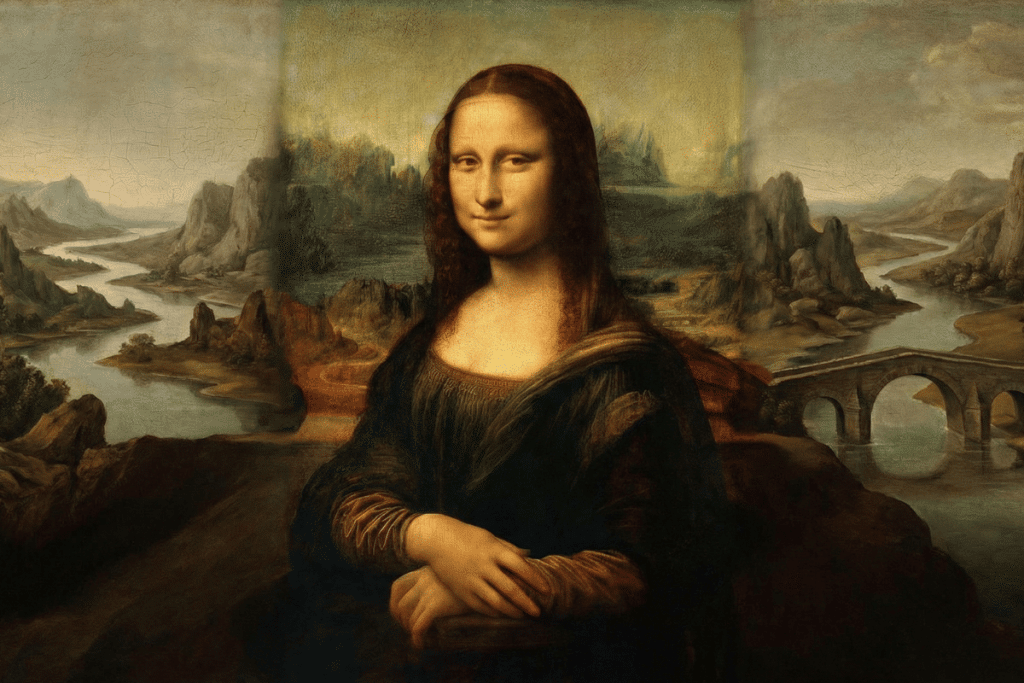
Leonardo’s most significant technical contribution to art is sfumato—a technique of blending colors and tones so subtly that there are no perceptible transitions, lines, or borders. It creates a smoky, atmospheric effect that breathes life into flat canvases.
- Mona Lisa: The most famous painting in the world owes its allure to sfumato. The enigmatic smile of the subject is achieved by blurring the corners of her mouth and eyes, leaving her exact expression open to the viewer’s interpretation.
- The Last Supper: This mural is a masterclass in linear perspective. Leonardo arranged the composition so that all vanishing points converge directly on the head of Christ, drawing the viewer’s eye exactly where he wanted it, while capturing the precise psychological moment of betrayal among the apostles.
Why He Is Important and an Influential Artists
Leonardo is at the top of this list because he elevated the status of the artist from a mere craftsman to an intellectual and a visionary.
He proved that painting is a science—a deliberate, calculated study of nature, light, and human psychology. Every realist painter who came after him owes a debt to his foundational studies of anatomy and light.

2. Vincent van Gogh (1853–1890)
If Leonardo da Vinci represents the intellectual summit of art, Vincent van Gogh represents its emotional core. A Dutch Post-Impressionist, Van Gogh’s life was tragically plagued by mental illness and poverty. He sold only a single painting during his lifetime, yet today, his works are among the most recognizable and expensive in human history.
Biography & Artistic Approach
Van Gogh came to art relatively late in his short life, fully dedicating himself to painting only in his late twenties. Over just a decade, he produced roughly 2,100 artworks, including around 860 oil paintings. Moving from the Netherlands to Paris, and eventually to the south of France, his style evolved from dark, somber depictions of peasant life to vibrant, explosive celebrations of color and light.

Key Contributions & Masterpieces
Van Gogh’s most profound contribution was his revolutionary use of color and brushwork to convey raw emotion rather than objective reality. He mastered the impasto technique, where paint is laid on the canvas in thick, textured strokes. You don’t just look at a Van Gogh painting; you can almost feel the physical energy and movement in his brushstrokes.
- The Starry Night: Painted while Van Gogh was in an asylum in Saint-Rémy-de-Provence, this masterpiece features swirling, turbulent skies that reflect his internal psychological state rather than a literal depiction of the night sky.
- Sunflowers: A series that demonstrated his ability to make yellow sing with vitality, showcasing the life cycle of flowers from vibrant bloom to wilted decay.
Why He Is Important and an Influential Artists
Van Gogh is undeniably one of the most important artists in history because he shattered the idea that a painting had to faithfully replicate the visual world. He used color as a tool for personal expression.
Without Van Gogh’s brave, expressive deviations from realism, the entire 20th-century movement of Expressionism (and arguably Fauvism and abstract art) would not have been possible. He taught the world that art is not just about what you see, but how you feel about what you see.

3. Michelangelo Buonarroti (1475–1564)
While Leonardo observed the world, his fierce rival Michelangelo sought to conquer it. A sculptor, painter, architect, and poet of the High Renaissance, Michelangelo created works of such sheer scale, physical perfection, and dramatic intensity that his contemporaries referred to him as Il Divino (“The Divine One”).
Biography & Artistic Approach
Born in the Republic of Florence, Michelangelo considered himself first and foremost a sculptor. He believed that the figure was already trapped inside the block of marble, and his only job was to chip away the excess stone to set it free. This philosophy extended to his painting, where his figures possess a sculptural, muscular volume that makes them appear three-dimensional.

Key Contributions & Masterpieces
Michelangelo’s primary contribution was his absolute mastery of human anatomy and his ability to infuse static stone and plaster with terribilità—a sense of awe-inspiring grandeur, passion, and terror.
- The Sistine Chapel Ceiling: Specifically The Creation of Adam, this grueling four-year fresco project revolutionized Western art. The dynamic tension between the fingers of God and Adam, separated by a millimeter of negative space, is one of the most brilliant compositional choices in art history.
- David: A 17-foot marble statue that redefined the classical hero. Instead of showing David after defeating Goliath, Michelangelo sculpted him in the tense, focused moment before the battle, capturing human intellect and anxiety.
Why He Is Important and an Influential Artists
Michelangelo pushed the boundaries of human potential in art. He proved that an artist could be a visionary force capable of executing Herculean, monumental visions that command architectural spaces. His heroic, exaggerated proportions directly birthed the Mannerist movement and influenced centuries of figure drawing, setting a standard for the human form that is still studied in academies today

4. Pablo Picasso (1881–1973)
No discussion of art history is complete without the man who took the traditions established by Leonardo and Michelangelo and intentionally smashed them to pieces. Pablo Picasso, a Spanish painter and sculptor, was the driving force behind the radical shift into modern art.
Biography & Artistic Approach
A child prodigy who mastered classical realism by his early teens, Picasso famously claimed, “It took me four years to paint like Raphael, but a lifetime to paint like a child.” Because he had already conquered traditional techniques, he spent the rest of his exceptionally long and prolific career inventing new ones. He moved through distinct periods (the Blue Period, the Rose Period) before fundamentally changing the trajectory of 20th-century art.

Key Contributions & Masterpieces
Picasso’s monumental contribution was the co-invention of Cubism. Instead of using linear perspective to create the illusion of 3D space on a flat canvas (as Leonardo did), Cubism fractures objects and figures, displaying them from multiple angles simultaneously.
- Les Demoiselles d’Avignon: Painted in 1907, this aggressively flattened, jagged depiction of five sex workers abandoned all known rules of perspective and proportion, essentially launching Modernism.
- Guernica: A massive, chaotic mural painted entirely in black, white, and gray. It depicts the bombing of a Basque town during the Spanish Civil War. Through fractured, agonizing forms, it remains the most powerful anti-war painting ever created.
Why He Is Important and an Influential Artists
Picasso is crucial because he liberated artists from the obligation of copying reality. By proving that an artist could deconstruct the visual world and reassemble it into a new intellectual framework, he opened the floodgates for Futurism, Surrealism, Abstract Expressionism, and almost every avant-garde movement that followed.
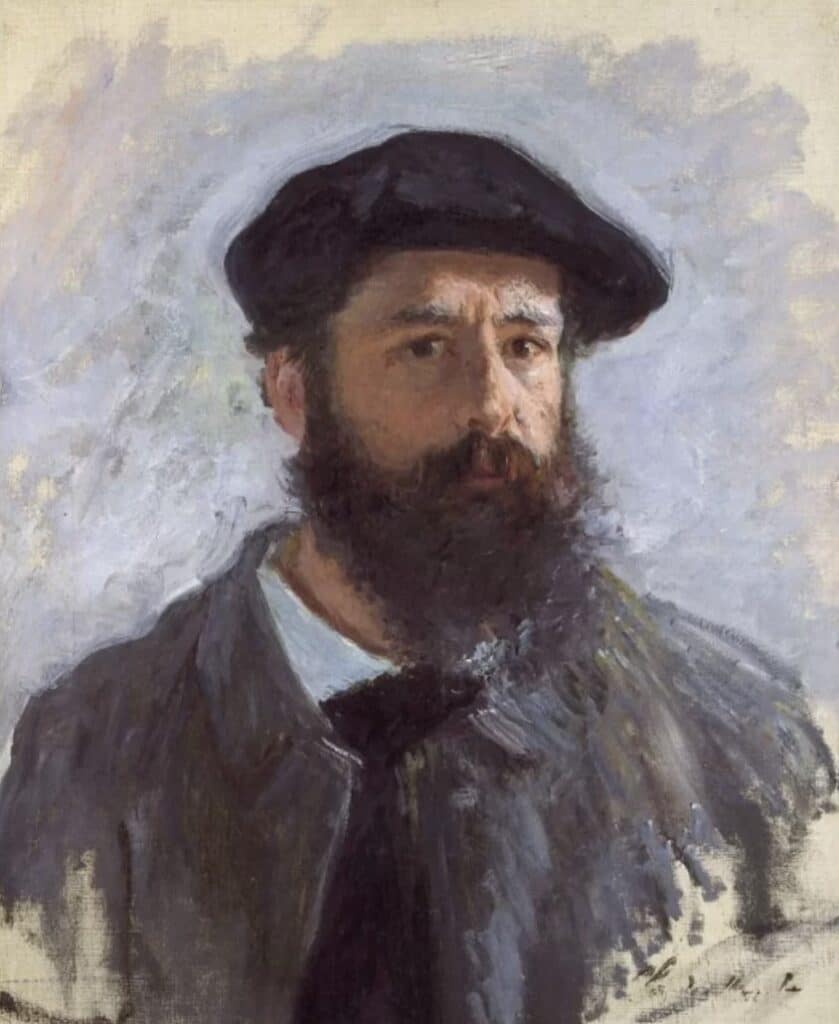
5. Claude Monet (1840–1926)
If Picasso shattered form, Claude Monet shattered the rules of light. As the founding father of Impressionism, Monet transformed painting from an indoor, academic exercise into a vibrant, outdoor exploration of fleeting moments.
Biography & Artistic Approach
In the mid-19th century, the French art establishment (the Salon) dictated that good art was highly polished, historically themed, and painted in studios using dark, varnished tones. Monet, alongside a group of radical peers, rebelled. He moved his easel outdoors (en plein air) to paint exactly what he saw, exactly when he saw it.

Key Contributions & Masterpieces
Monet’s genius lay in his understanding that we do not see objects; we see the light bouncing off objects. He developed a style using rapid, broken brushstrokes of pure, unmixed color to capture the temporary atmospheric conditions of a scene.
- Impression, Sunrise: The painting that gave the Impressionist movement its name. It is a loose, hazy depiction of a harbor at dawn. Critics initially insulted it as an unfinished “impression,” but Monet embraced the term.
- The Water Lilies: In his later years, Monet cultivated a massive garden in Giverny and spent decades painting his water lily ponds. These massive, immersive canvases border on total abstraction, focusing purely on the interplay of water, reflections, and changing light.
Why He Is Important and an Influential Artists
Monet is historically vital because he democratized the subject matter of art. He proved that a simple haystack, a train station, or a pond could be just as worthy of a masterpiece as a grand historical battle or a biblical scene. Furthermore, by prioritizing optics and the sensation of light over physical outlines, he paved the way for Van Gogh’s emotional color palettes and the eventual rise of pure abstraction.

The Thread of the Influential Artists
When you look at these five artists—Leonardo da Vinci, Vincent van Gogh, Michelangelo, Pablo Picasso, and Claude Monet—a clear narrative of art history emerges.
Leonardo and Michelangelo built the foundation, proving that art could achieve intellectual and physical perfection. Centuries later, Monet dragged art out of the dark studios and into the light, changing how we see atmosphere. Van Gogh took that light and turned it inward, using color to expose the human soul. Finally, Picasso took the entire structure of visual reality and rearranged it for the modern era.
They are the most influential artists of all time not just because their paintings hang in the Louvre or the MoMA, but because it is impossible to imagine the visual world today without the aesthetic boundaries they relentlessly pushed.
Anita Louise Art is dedicated to art education, great artists, and inspiring others to find and create their art. We love art that uplifts and inspires. #ArtToMakeYouSmile! #ArtToMakeYouHappy!
If you want to see any of my art, you can find out more by clicking here. If you are interested in what inspires me and my paintings, you can discover more by clicking here.
We have a free newsletter and would love you to be part of our community; you can subscribe to the newsletter by clicking here. If you have any questions, I would be happy to talk to you anytime. You can reach me, Anita, by clicking here.
Subscribe to our Anita Louise Art YouTube Channel with great videos and information by clicking here.
Join us for our podcast “5 Minutes With Art or Deep Dive with 5 Minutes With Art” Spend just a few minutes a week with us to discover and learn about great art and artists. You can find out more about our podcast by clicking here.
Related Questions
The Myth of the Tortured Artist: Is Suffering the Secret Ingredient to Greatness?
There is a persistent, almost seductive belief in the art world: that to create truly profound work, an artist must first be broken. We have romanticized the “starving artist” and the “mad genius” to the point where we sometimes wonder if stability is the enemy of creativity. But is this true? Is suffering actually a prerequisite for greatness, or is the “Tortured Artist” a myth that does more harm than good?
The Myth of the Tortured Artist: Is Suffering the Secret Ingredient to Greatness? Click here to learn more.
Van Gogh Color Symbolism: The Secret Language of Yellow and Blue and What It Reveals About the Human Soul
If you were to close your eyes and think of the name “Vincent van Gogh,” what do you see? Chances are, it isn’t just a face with a red beard. It’s a vivid display of Van Gogh Color Symbolism—a collision of colors that define his art: the searing, almost blinding yellow of a sunflower set against a swirling, deep-midnight blue. These iconic hues are more than aesthetic choices; they embody the emotional depth and creative vision that make Van Gogh’s work so unforgettable.
Van Gogh Color Symbolism: The Secret Language of Yellow and Blue and What It Reveals About the Human Soul Click here to discover more.
Katsushika Hokusai: The “Old Man Mad About Drawing” Who Changed the World
We often think of “influencers” as a modern phenomenon, but Katsushika Hokusai proves that true influence transcends time and technology. In the 19th century, Katsushika Hokusai was the biggest influencer in the art world—not with a smartphone, but with a woodblock, a bowl of Prussian Blue ink, and a spiritual obsession with a mountain. His groundbreaking work continues to inspire artists and admirers around the globe.