
The genius of Leonardo da Vinci stands as one of history’s most celebrated phenomena—a brilliance that transcended the boundaries of art, science, engineering, anatomy, and philosophy. Born in 1452 in Vinci, Italy, Leonardo’s insatiable curiosity and relentless pursuit of knowledge led him to create masterpieces that have endured for centuries. His works, such as the Mona Lisa and The Last Supper, continue to captivate audiences and inspire artists around the globe, making him a timeless figure in the annals of human creativity.
Read on as we will dive into the life and legacy of Leonardo da Vinci, explore his most iconic masterpieces, and examine how his innovative techniques and visionary ideas shaped the art world and continue to inspire generations.
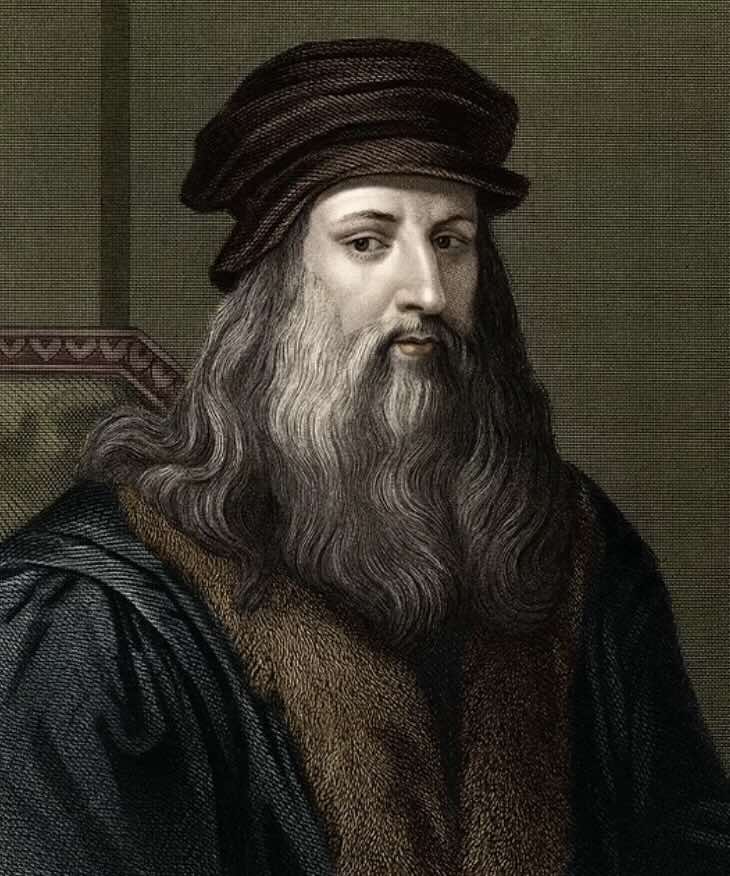
The Timeless Genius of Leonardo da Vinci: Exploring His Greatest Works
Leonardo da Vinci stands as one of history’s most celebrated polymaths—a man whose brilliance transcended the boundaries of art, science, engineering, anatomy, and philosophy.
Born in 1452 in Vinci, Italy, Leonardo’s insatiable curiosity and relentless pursuit of knowledge led him to create masterpieces that have endured for centuries. His works, such as the Mona Lisa and The Last Supper, continue to captivate audiences and inspire artists around the globe, making him a timeless figure in the annals of human creativity.
Genius of Leonard da Vinci and His Early Life and Influences
Leonardo was born out of wedlock to a notary, Ser Piero, and a peasant woman, Caterina, in the small town of Vinci. From an early age, he displayed remarkable artistic talent and an unquenchable thirst for understanding the world around him. His father recognized Leonardo’s potential and apprenticed him to Andrea del Verrocchio, a prominent Florentine artist. Under Verrocchio’s guidance, Leonardo honed his skills in painting, sculpture, and technical drawing, laying the foundation for his future masterpieces.
Florence, during Leonardo’s youth, was a vibrant center of art and intellectual activity. The city’s atmosphere of innovation and exploration deeply influenced him, encouraging him to pursue a multidisciplinary approach that would become his hallmark.
The Renaissance Context and Genius of Leonardo da Vinci
To appreciate Leonardo’s genius, it’s essential to understand the context of the Renaissance—a period marked by an explosion of creativity, scientific discovery, and philosophical inquiry. Artists like Michelangelo, Raphael, and Botticelli were transforming the artistic landscape, but Leonardo’s approach set him apart. He sought not only to depict beauty but also to understand the underlying principles of nature, anatomy, and perspective.
The Renaissance was a time when art and science were intertwined; artists were expected to be inventors, thinkers, and observers. Leonardo embodied this spirit more than anyone, seamlessly blending artistic excellence with scientific investigation.
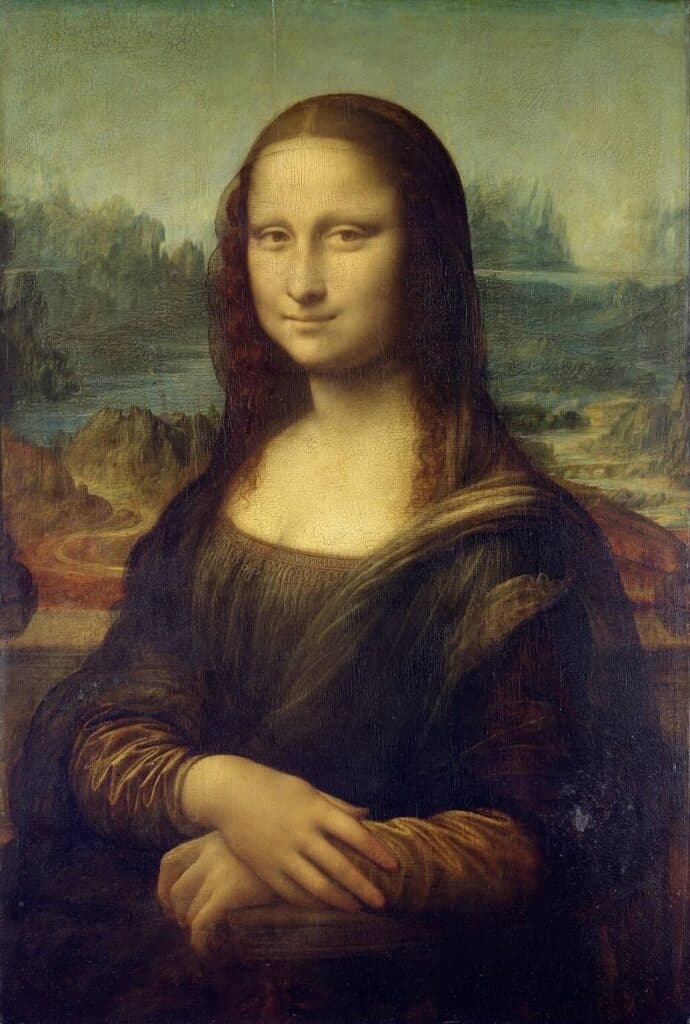
The Mona Lisa: Mystery and Mastery Show The Genius of Leonardo da Vinci
The Enigmatic Smile
Perhaps Leonardo’s most famous work, the Mona Lisa, is renowned for its enigmatic smile and captivating gaze. Painted between 1503 and 1506, the portrait of Lisa Gherardini, the wife of a Florentine merchant, has become a symbol of artistic perfection and mystery.
The Mona Lisa’s smile has been the subject of endless speculation, with some suggesting it reflects happiness, others sadness, and still others a profound sense of wisdom.
Innovative Techniques
Leonardo’s mastery of sfumato—a technique involving the delicate blending of colors and tones—created a soft, almost ethereal quality in the Mona Lisa. This approach allowed him to render realistic skin textures and subtle transitions between light and shadow, giving the portrait a lifelike presence.
Moreover, Leonardo’s understanding of human anatomy is evident in the Mona Lisa’s proportions and posture. He meticulously studied the muscles, bones, and expressions of the human face, translating his observations into a painting that feels alive and contemplative.
Cultural Impact
The Mona Lisa has transcended its status as a mere artwork to become a cultural icon. Displayed in the Louvre Museum in Paris, it attracts millions of visitors each year. Its influence extends beyond the art world, inspiring countless reinterpretations, parodies, and references in literature, film, and popular culture.

The Last Supper Shows The Genius of Leonardo da Vinci
A Revolutionary Composition
Another of Leonardo’s masterpieces, The Last Supper, was painted between 1495 and 1498 on the wall of the Convent of Santa Maria delle Grazie in Milan. Depicting the moment Jesus announces one of his disciples will betray him, the painting is celebrated for its dramatic composition and emotional intensity.
Leonardo broke with tradition by arranging the apostles in dynamic groups, capturing their reactions with astonishing realism. The use of perspective draws the viewer’s eye to the central figure of Christ, creating a sense of depth and focus that was revolutionary at the time.
Technical Challenges
Painting The Last Supper presented significant technical challenges. Leonardo experimented with a new method—using tempera and oil on dry plaster instead of the traditional fresco technique.
While this allowed for greater detail and subtlety, it also made the painting vulnerable to deterioration. Despite extensive restoration efforts, much of the original work has been lost, but its impact remains undiminished.
Symbolism and Storytelling
Leonardo infused The Last Supper with layers of symbolism. The placement of the figures, the gestures, and even the arrangement of the food and tableware all contribute to the narrative. Each apostle’s reaction is unique, reflecting their personality and relationship to Christ. The painting invites viewers to contemplate the drama and significance of the moment, making it a masterpiece of storytelling through art.
Leonardo’s Scientific Approach to Art
Anatomy and Observation
Leonardo’s notebooks reveal a mind obsessed with understanding the mechanics of life. He dissected human bodies, studied muscles and bones, and recorded his findings with detailed sketches. These anatomical studies informed his art, enabling him to depict the human form with unprecedented accuracy.
His scientific approach extended to the study of light, perspective, and motion. Leonardo believed that art should reflect the true nature of its subjects, and he pursued this goal through careful observation and experimentation.
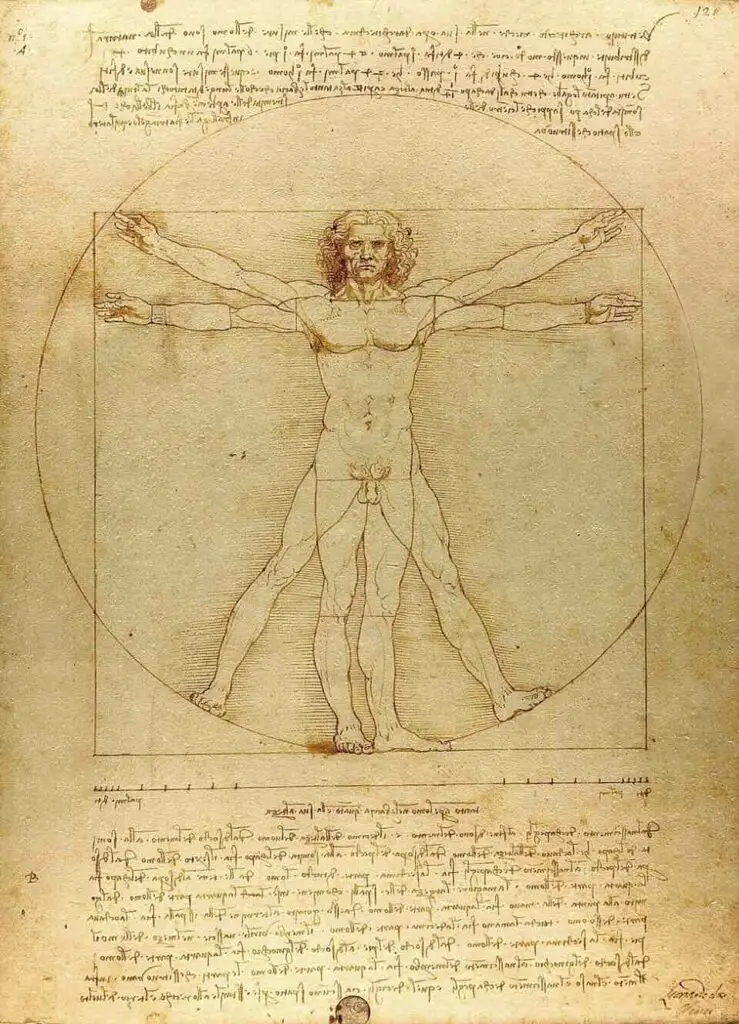
The Vitruvian Man
One of Leonardo’s most famous drawings, The Vitruvian Man, exemplifies his blending of art and science.
Based on the writings of the ancient Roman architect Vitruvius, the drawing illustrates the ideal proportions of the human body. It serves as a visual representation of Leonardo’s belief in harmony between man and nature, and the importance of mathematical principles in art.
Other Notable Works That Show The Genius of Leonardo da Vinci

Lady with an Ermine
Painted around 1489–1490, Lady with an Ermine is a portrait of Cecilia Gallerani, a young woman at the Milanese court. The painting is remarkable for its psychological depth and the lifelike rendering of both the subject and the animal. Leonardo’s use of light and shadow creates a sense of intimacy and realism, showcasing his technical prowess.

The Baptism of Christ
While apprenticed to Verrocchio, Leonardo contributed to The Baptism of Christ, painting the angel on the left and parts of the background. His work stood out for its softness and grace, foreshadowing the techniques he would later perfect.
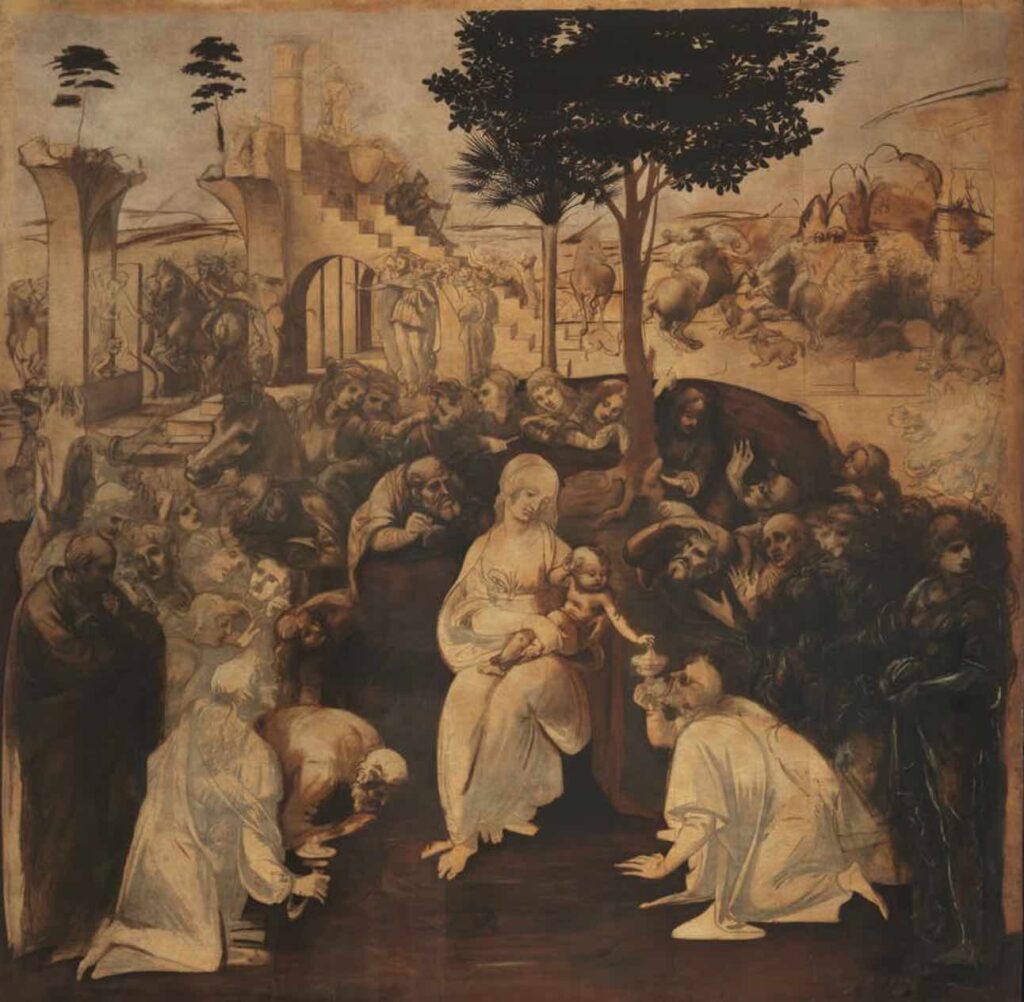
The Adoration of the Magi
The Adoration of the Magi is an unfinished work, but it reveals Leonardo’s ambitious vision. The complex composition and dynamic poses demonstrate his desire to capture movement and emotion, pushing the boundaries of traditional religious art.
Leonardo’s Legacy in Engineering and Invention
The genius of Leonardo da Vinci was not confined to painting. He designed machines, studied flight, and conceived inventions far ahead of his time. His notebooks are filled with sketches of helicopters, tanks, and intricate mechanical devices. Though many of his inventions were never built, they showcase his visionary thinking and influence on future generations of engineers and inventors.
His studies of water, anatomy, and mechanics contributed to advancements in science and technology. Leonardo’s holistic approach—combining art, science, and imagination—remains a model for innovation today.
The Universal Man: Why Leonardo Still Inspires Us
Endless Curiosity
The genius of Leonardo da Vinci and his enduring appeal lies in his boundless curiosity. He approached every subject with a sense of wonder, always seeking to understand more deeply. This curiosity drove him to explore fields as diverse as anatomy, engineering, botany, and astronomy.
Artistic Innovation
Leonardo’s techniques revolutionized art. His use of sfumato, perspective, and anatomical precision set new standards for realism and expression. He challenged artists to look beyond surface appearances and capture the essence of their subjects.
Interdisciplinary Genius
Leonardo’s life demonstrates the power of interdisciplinary thinking. He refused to be limited by the boundaries of any single field, blending art, science, and philosophy into a unified pursuit of knowledge. This approach resonates strongly in today’s world, where creativity and innovation often arise from the intersection of disciplines.

Modern Influence and Inspiration
Art and Science
The genius of Leonardo da Vinci and his legacy continues to inspire artists, scientists, and thinkers. His notebooks are studied by scholars seeking insight into his methods and ideas. Contemporary artists draw inspiration from his techniques, while engineers and inventors marvel at his visionary designs.
Popular Culture
Leonardo’s influence extends into popular culture. His works are referenced in films, novels, and advertisements, and his life is the subject of countless biographies and documentaries. The Mona Lisa’s smile and The Last Supper’s drama have become part of our collective imagination.

Education and Creativity
Leonardo’s example encourages lifelong learning and creative exploration. Schools and universities teach his methods, emphasizing observation, experimentation, and the integration of knowledge across fields. His life reminds us that true genius lies in the relentless pursuit of understanding and the courage to innovate.
The genius of Leonardo da Vinci is truly timeless. His masterpieces, such as the Mona Lisa and The Last Supper, continue to enchant and inspire, while his scientific investigations and inventions reveal a mind far ahead of its time. Leonardo’s innovative techniques, visionary ideas, and interdisciplinary approach have shaped the art world and influenced countless fields.
As we reflect on his life and legacy, we are reminded that creativity knows no bounds. Leonardo’s relentless curiosity and passion for discovery serve as a guiding light for artists, scientists, and dreamers everywhere. His works invite us to look deeper, to question, and to imagine new possibilities—a testament to the enduring power of human ingenuity.
Call to Action
Whether you are an artist, a scientist, or simply someone who loves beauty and innovation, take inspiration from the genius of Leonardo da Vinci. Explore his works, study his methods, and embrace the spirit of curiosity and creativity that defined his life. In doing so, you join a tradition that has shaped our world and will continue to inspire generations to come.
Let Leonardo’s genius remind us: the pursuit of knowledge and the creation of beauty are timeless endeavors, forever shaping the world and our understanding of it.
Deep Dive Podcast – The Genius of Leonardo da Vinci
Listen to our Deep Dive Podcast.
Anita Louise Art is dedicated to art education, great artists, and inspiring others to find and create their art. We love art that uplifts and inspires. #ArtToMakeYouSmile! #ArtToMakeYouHappy!
If you want to see any of my art, you can find out more by clicking here. If you are interested in what inspires me and my paintings, you can discover more by clicking here.
We have a free newsletter and would love you to be part of our community; you can subscribe to the newsletter by clicking here. If you have any questions, I would be happy to talk to you anytime. You can reach me, Anita, by clicking here.
Subscribe to our Anita Louise Art YouTube Channel with great videos and information by clicking here.
Join us for our podcast “5 Minutes With Art or Deep Dive with 5 Minutes With Art” Spend just a few minutes a week with us to discover and learn about great art and artists. You can find out more about our podcast by clicking here.
Related Questions
The Myth of the Tortured Artist: Is Suffering the Secret Ingredient to Greatness?
There is a persistent, almost seductive belief in the art world: that to create truly profound work, an artist must first be broken. We have romanticized the “starving artist” and the “mad genius” to the point where we sometimes wonder if stability is the enemy of creativity. But is this true? Is suffering actually a prerequisite for greatness, or is the “Tortured Artist” a myth that does more harm than good?
The Myth of the Tortured Artist: Is Suffering the Secret Ingredient to Greatness? Click here to learn more.
Van Gogh Color Symbolism: The Secret Language of Yellow and Blue and What It Reveals About the Human Soul
If you were to close your eyes and think of the name “Vincent van Gogh,” what do you see? Chances are, it isn’t just a face with a red beard. It’s a vivid display of Van Gogh Color Symbolism—a collision of colors that define his art: the searing, almost blinding yellow of a sunflower set against a swirling, deep-midnight blue. These iconic hues are more than aesthetic choices; they embody the emotional depth and creative vision that make Van Gogh’s work so unforgettable.
Van Gogh Color Symbolism: The Secret Language of Yellow and Blue and What It Reveals About the Human Soul Click here to discover more.
Katsushika Hokusai: The “Old Man Mad About Drawing” Who Changed the World
We often think of “influencers” as a modern phenomenon, but Katsushika Hokusai proves that true influence transcends time and technology. In the 19th century, Katsushika Hokusai was the biggest influencer in the art world—not with a smartphone, but with a woodblock, a bowl of Prussian Blue ink, and a spiritual obsession with a mountain. His groundbreaking work continues to inspire artists and admirers around the globe.